
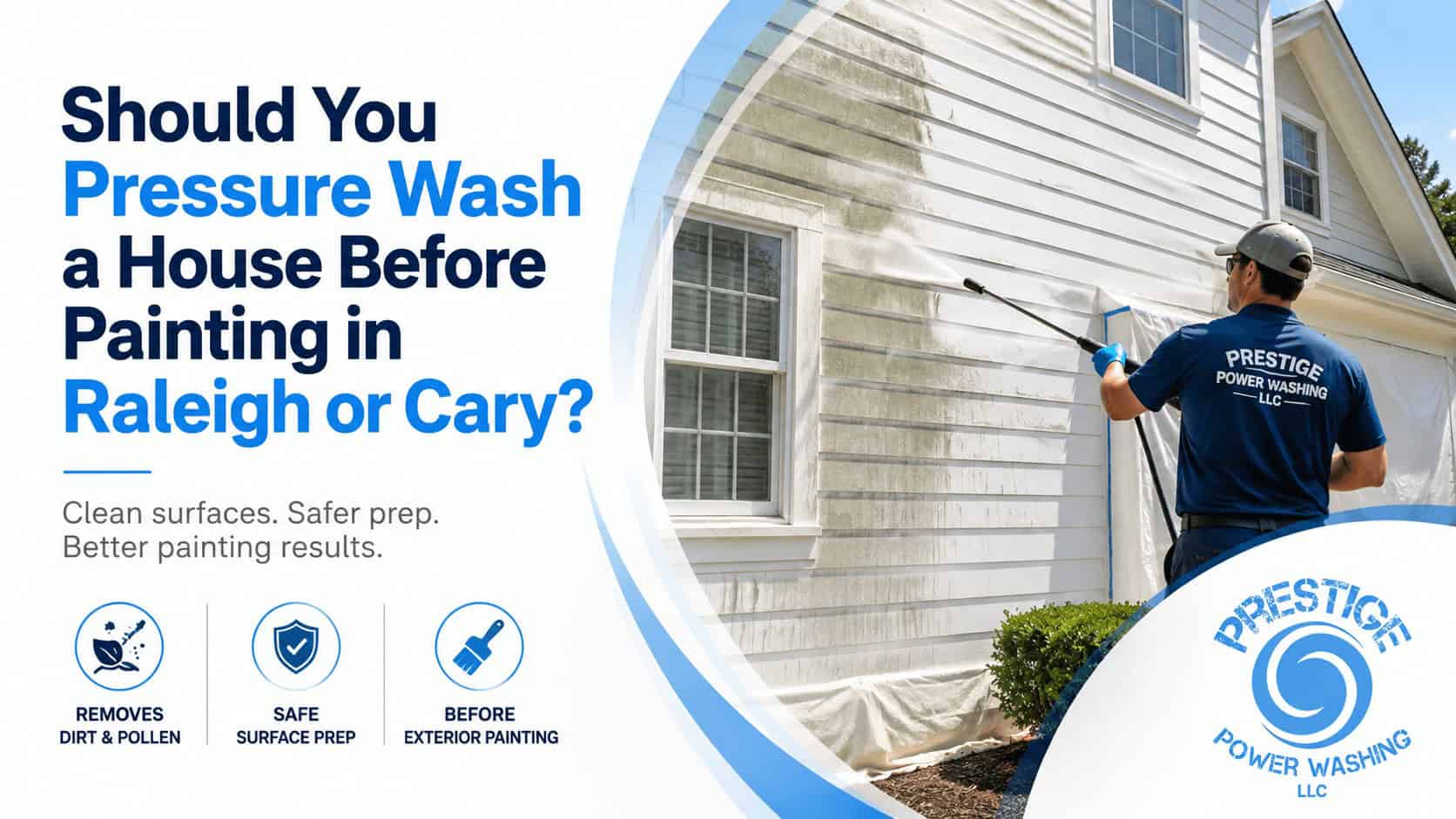
Should You Pressure Wash a House Before Painting in Raleigh or Cary?
Pressure washing before painting can help prepare a house by removing dirt, pollen, cobwebs, and organic buildup that could interfere with the new coating. However, the cleaning method must fit the surface. Washing alone does not replace scraping, sanding, repairs, priming, or other preparation required by the painting contractor.
For homeowners in Raleigh and Cary, exterior preparation can be especially important. Humidity, tree coverage, spring pollen, repeated rain, and shaded walls can leave siding and trim coated with material that should not be painted over.
The goal is not to blast away every visible imperfection. It is to create a clean surface without damaging the siding, forcing water behind building materials, or improperly disturbing deteriorated paint.
Prestige Power Washing LLC provides professional full-detail house washing for properties in Cary, Raleigh, and confirmed Triangle service communities. Before scheduling exterior cleaning for a painting project, tell us that painting is planned so the condition, surfaces, and timing can be evaluated appropriately.
Should You Wash a House Before Exterior Painting?
In most cases, a dirty exterior should be cleaned before it is painted. Paint manufacturers generally instruct applicators to remove surface contamination, rinse thoroughly, and allow the surface to dry. Loose or peeling coatings may then require scraping and sanding to reach a sound surface.
Cleaning may help remove:
- Pollen
- Dust and dirt
- Cobwebs
- Algae-like discoloration
- Mildew-like surface buildup
- Bird droppings
- Insect residue
- General atmospheric grime
- Light chalking or loose surface residue, depending on the material
A clean exterior gives the painter a better surface to inspect. It may reveal peeling coatings, failed caulk, soft wood, cracked siding, damaged trim, or other conditions that were partly hidden by buildup.
Washing does not prove that the surface is structurally sound or ready for paint. The painting contractor must still determine whether repairs, scraping, sanding, caulking, priming, or moisture testing are necessary.
Pressure Washing Is Not the Same as Paint Removal
Pre-paint cleaning should primarily remove contamination. It should not be treated as an uncontrolled method of stripping paint from the house.
A strong water stream can remove paint that is already loose, but it can also:
- Scar wood
- Etch softer materials
- Damage siding
- Force water behind laps and joints
- Damage vulnerable window components
- Disturb deteriorated coatings
- Spread paint chips or contaminated wastewater
- Leave visible wand marks
- Increase the amount of repair work
Sherwin-Williams’ exterior surface-preparation guidance separates washing from the later preparation steps of scraping and sanding peeled or checked paint. That distinction matters: cleaning prepares the surface for inspection, while the painter completes coating-specific preparation.
Homeowners should be cautious of any plan that relies on maximum pressure to remove all failing paint. More force is not automatically better preparation.
Soft Washing Versus High-Pressure Cleaning Before Painting
The appropriate method depends on the material, coating condition, and type of buildup.
Soft washing uses lower application pressure and an appropriate cleaning process to loosen exterior contamination before rinsing. It is often more suitable than aggressive pressure for siding, trim, and other vulnerable parts of a house.
Controlled pressure washing may be appropriate for durable, unpainted surfaces such as certain concrete walkways or masonry areas, provided the material is in serviceable condition.
Prestige’s broader power-washing service information explains why roofs, siding, painted surfaces, and older materials should not be treated the same way as durable concrete or asphalt. The cleaning method should reflect the surface, buildup, age, coating condition, and surrounding property.
| Surface or Condition | Typical Preparation Consideration | What to Avoid |
|---|---|---|
| Vinyl siding | Lower-pressure exterior cleaning may remove pollen, dirt, and organic buildup. | Forcing water upward or behind siding. |
| Painted wood | Inspect for loose paint, rot, and open joints before cleaning. | Aggressive spray that scars wood or strips sound paint. |
| Fiber-cement siding | Follow the manufacturer’s cleaning and coating instructions. | Assuming it can be treated like concrete. |
| Brick | Inspect mortar and previous coatings before cleaning. | High pressure on deteriorated mortar or painted masonry. |
| Stucco | Check for cracks, hollow areas, and coating failure. | Concentrated pressure that damages the finish. |
| Concrete foundation or walkway | Controlled pressure may be suitable on sound material. | Painting before porous material is adequately dry. |
| Older painted exterior | Determine whether lead-safe requirements may apply. | Disturbing deteriorated paint without proper controls. |
The final method should be selected after inspecting the actual property. A material may look durable from a distance but have failed paint, cracked joints, or age-related deterioration that changes how it should be cleaned.
When Should a House Not Be Pressure Washed Before Painting?
Cleaning should be postponed or referred to another professional when the property’s condition makes ordinary exterior washing inappropriate.
The Paint Is Peeling Extensively
Large areas of loose, flaking, or blistered paint may require the painting contractor to establish a controlled preparation plan first. Washing without coordination can scatter chips and make containment more difficult.
The Property May Have Lead-Based Paint
Homes built before 1978 require additional caution because older coatings may contain lead. The U.S. Environmental Protection Agency explains that pressure washing is not automatically prohibited under its Renovation, Repair and Painting Rule. However, applicable renovation work must use containment that prevents dust, debris, and wastewater from leaving the work area.
Review the EPA’s guidance on pressure washing and lead-safe renovation requirements for additional information.
When lead paint is suspected, consult an appropriately certified lead-safe contractor before disturbing the coating. Exterior cleaning should not be represented as lead abatement or lead-safe renovation unless the provider’s qualifications and service scope have been separately verified.
Wood or Siding Is Damaged
Rotten wood, loose boards, open siding, failed window trim, and damaged sheathing need repair evaluation. Cleaning cannot correct these defects and may allow additional water entry.
Windows, Doors, or Exterior Penetrations Are Not Sealed
Open joints around windows, vents, utility penetrations, lights, and doors should be identified before washing. Water should not be directed into vulnerable openings.
The Painter Has Specified a Different Preparation Method
The painter or coating manufacturer may require hand washing, specialized cleaners, sanding, moisture testing, or another preparation sequence. Cleaning should support that specification rather than conflict with it.
Who Should Be Involved Before the House Is Washed?
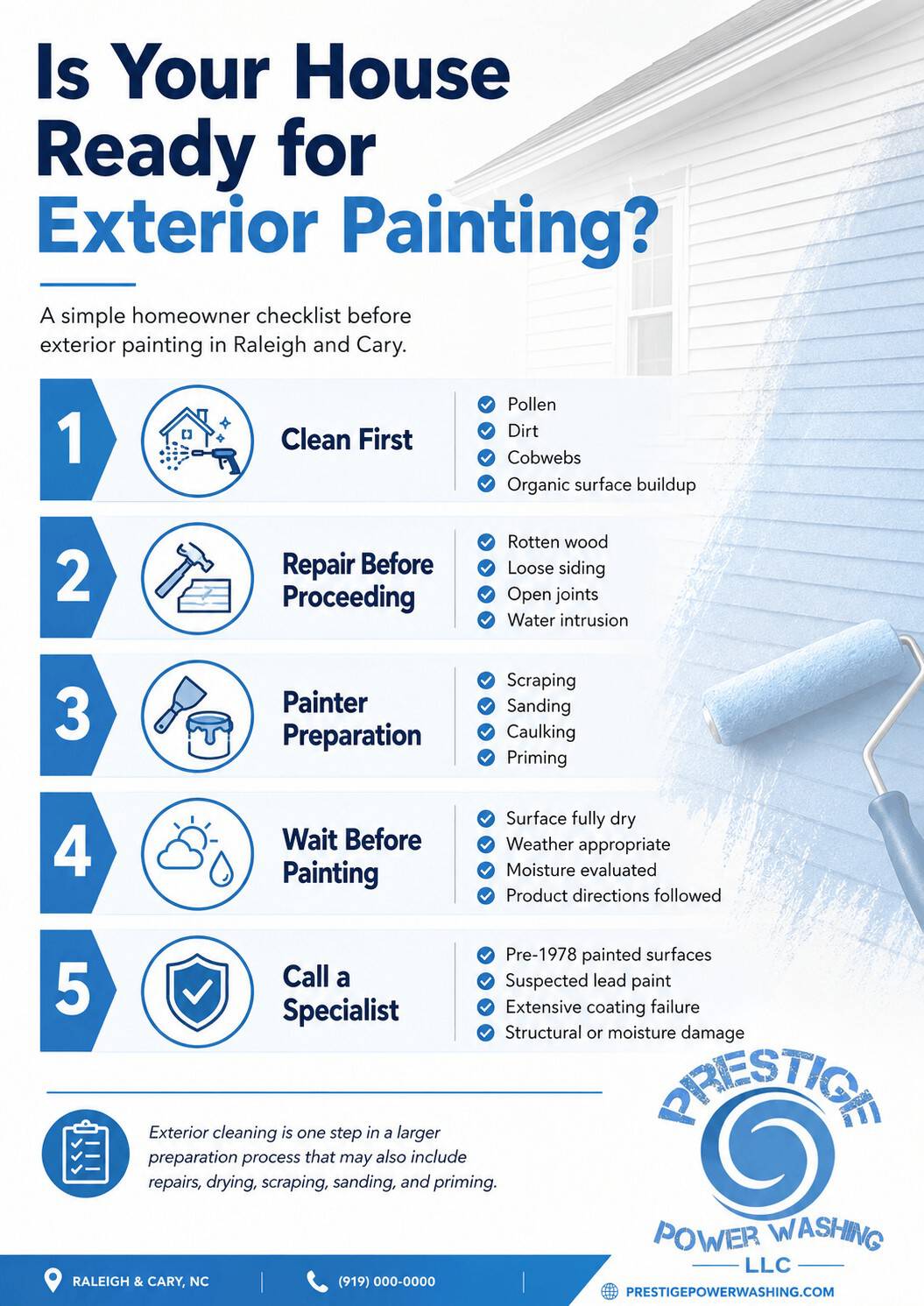
The best results usually come from coordination between the homeowner, exterior-cleaning company, and painting contractor.
| Condition | Appropriate Professional |
|---|---|
| Dirt, pollen, cobwebs, and ordinary exterior buildup | Exterior-cleaning company |
| Loose paint, sanding, scraping, and primer selection | Painting contractor |
| Rotten wood, damaged siding, or failed trim | Carpenter, siding contractor, or repair professional |
| Suspected lead-based paint | EPA-certified lead-safe renovation professional |
| Active water intrusion | Qualified building or repair professional |
| Questions about coating compatibility | Painter and paint manufacturer |
| Cleaning method for siding and exterior surfaces | Exterior cleaner, coordinated with the painter |
Before accepting the cleaning estimate, tell the company:
- Which surfaces will be painted.
- When the painter expects to begin.
- Whether the home was built before 1978.
- Whether any paint is peeling, blistering, or chalking.
- Whether damaged wood or siding is present.
- Whether the painter supplied written preparation instructions.
- Whether landscaping, furniture, or exterior fixtures require special access planning.
This communication prevents the cleaning and painting schedules from being treated as unrelated projects.
How Long After Pressure Washing Can You Paint?
Do not paint until the surface is fully dry and meets the coating manufacturer’s requirements. There is no universally correct waiting period for every house.
Drying time depends on:
- Humidity
- Air temperature
- Sun exposure
- Shade
- Wind
- Surface porosity
- Material thickness
- Water entry behind siding
- Recent rainfall
- Time of year
- The paint or coating being applied
Paint manufacturers instruct users to rinse cleaned surfaces and allow them to dry, but the exact requirement can vary by material and product.
A painter may choose to use a moisture meter on wood, masonry, or other porous materials. That is more reliable than assuming the surface is ready because it feels dry to the touch.
Raleigh and Cary humidity can slow drying, particularly on shaded sides of a house or walls surrounded by dense trees. Avoid building the project schedule around the shortest possible waiting period.
A Practical Scheduling Approach
- Complete repairs that must occur before washing.
- Schedule the exterior cleaning.
- Allow suitable drying time based on the weather and material.
- Have the painter reinspect the surface.
- Complete scraping, sanding, caulking, and priming.
- Apply the coating according to its technical requirements.
The painting contractor should make the final decision about coating readiness.
Can You Paint Immediately After Pressure Washing?
No. Painting a surface that is still wet can trap moisture beneath the coating and interfere with adhesion or curing.
Even when the siding looks dry, moisture may remain:
- In wood fibers
- Behind siding laps
- In cracks or joints
- Around window trim
- In porous masonry
- Beneath peeling paint
- Along shaded elevations
The risk is not solved simply by choosing a sunny afternoon. Exterior conditions, the material, and the product instructions all matter.
Does Washing Remove Mold Before Painting?
Exterior cleaning may remove visible dirt and biological-looking surface buildup, but homeowners should avoid diagnosing every dark or green stain as mold.
Some discoloration may be:
- Algae
- Mildew-like surface growth
- Dirt
- Pollen
- Oxidation
- Tannin staining
- Rust
- Water staining
- Failed coating
- Moisture damage beneath the surface
Cleaning can improve removable surface contamination. It does not correct an active moisture source, concealed growth inside the wall, rotten material, or a failed building assembly.
When staining returns rapidly or appears connected to leaks, damaged siding, or indoor moisture, consult an appropriate building professional instead of treating repeated washing as the only solution.
Will Pressure Washing Remove Chalking From Old Paint?
It may remove some loose powder and residue, but the coating must still be evaluated by the painter.
Chalking occurs when a paint film produces a powdery surface as it ages or deteriorates. Washing may reduce that residue, yet remaining material can still interfere with coating adhesion.
The painter may need to:
- Test the existing finish
- Remove unsound residue
- Sand glossy or deteriorated areas
- Apply a compatible primer
- Select a coating designed for the substrate
Do not assume that a brighter-looking wall is automatically paint-ready.
Should Concrete or Masonry Be Cleaned Before Painting?
Concrete and masonry generally must be clean and sufficiently dry before a coating is applied. They may also require checks for moisture, pH, laitance, efflorescence, previous sealer, or incompatible coatings.
Sherwin-Williams’ professional surface-preparation guidance notes that concrete preparation can involve pressure cleaning, thorough drying, adhesion testing, and additional preparation when an existing coating system is incompatible.
Exterior cleaning can address dirt and ordinary surface buildup. It does not replace:
- Crack repair
- Efflorescence diagnosis
- Moisture correction
- Coating removal
- Acid etching or mechanical profiling
- pH testing
- Primer selection
- Adhesion testing
Those decisions belong to the coating professional.
How Raleigh and Cary Conditions Affect Pre-Paint Cleaning
Triangle properties face several conditions that can influence cleaning and drying.
Heavy Spring Pollen
Pollen can form a yellow or dull film on siding, trim, porches, and horizontal ledges. Painting over it can leave contamination beneath the coating.
Humidity and Shade
North-facing walls and tree-covered elevations may stay damp longer. These areas can develop green or dark surface buildup and may require more drying time after cleaning.
Red-Clay Splashback
Rain can carry North Carolina red-clay soil onto lower siding, foundation walls, and porch columns. Older stains may not respond as completely as fresh surface residue.
Storms and Repeated Rain
A project may need to be rescheduled when rainfall prevents proper drying or causes new debris to settle on the house.
Dense Landscaping
Shrubs, vines, and tree limbs can limit access and airflow. The cleaning company and painter may need clear access around walls, trim, and foundation areas.
These conditions do not justify a one-size-fits-all cleaning schedule. The property should be evaluated according to its exposure, surface material, and painting plan.
What Results Should Homeowners Expect?
Professional pre-paint house washing should aim to leave the applicable surfaces cleaner and better prepared for the painter’s next steps.
It should not be represented as a service that:
- Repairs rotten wood
- Replaces damaged siding
- Removes every permanent stain
- Reverses oxidation
- Restores failed paint
- Seals cracks or joints
- Guarantees paint adhesion
- Eliminates the need for scraping or sanding
- Corrects drainage or moisture problems
- Performs lead abatement
- Determines coating compatibility
Older stains, oxidized siding, and weathered paint may remain visibly uneven after washing. That does not necessarily mean the cleaning failed. It may indicate coating deterioration or material changes that require painting, restoration, or replacement.
How to Prepare for a Pre-Paint House Wash
Before the cleaning appointment:
- Confirm the painting schedule with the contractor.
- Share the painter’s preparation requirements.
- Identify visibly loose or peeling paint.
- Disclose the approximate age of the property.
- Repair known open siding, rotten wood, or damaged trim when required.
- Close windows and doors securely.
- Clear furniture and movable items away from the house.
- Provide access to exterior water and work areas as requested.
- Identify electrical fixtures, outlets, or penetrations with known problems.
- Avoid scheduling painting immediately after cleaning without allowing for weather-dependent drying.
The cleaner may provide additional preparation instructions based on the property.
Is Professional House Washing Worth Scheduling Before Painting?
Professional cleaning is worth considering when ordinary exterior buildup needs to be removed and the homeowner wants the cleaning coordinated with the painting project.
The value comes from:
- Matching the method to the surface
- Reaching larger exterior areas consistently
- Avoiding unnecessary high pressure
- Identifying cleaning limitations before work begins
- Preparing a cleaner surface for the painter’s inspection
- Reducing the burden of renting and operating equipment
- Coordinating timing around weather and drying
DIY washing may be practical for a small, durable, easily accessible area. A full house introduces more complicated surfaces, upper-story access, windows, electrical components, landscaping, and coating conditions.
High-pressure water can also cause serious injury. A homeowner who is uncertain about the equipment, surface, or existing paint should not treat the project as a simple weekend rinse.
Schedule Exterior Cleaning Before Your Painting Project
Cleaning is an important part of exterior paint preparation, but it is only one part. The house must also be dry, sound, and prepared according to the painter’s and coating manufacturer’s requirements.
Prestige Power Washing LLC is a family-owned and locally operated exterior-cleaning company based in Cary and serving Raleigh and confirmed Triangle communities. The company has operated since 2017 with an emphasis on careful workmanship, communication, and customer-first service. Learn more about our company and approach.
To discuss pressure washing before painting, call 919-810-5215 or request an exterior-cleaning estimate. Tell us what you plan to paint and when the painting contractor expects to begin so we can evaluate the appropriate next step.
Frequently Asked Questions About Pressure Washing Before Painting
Do you have to pressure wash a house before painting?
A dirty house should generally be cleaned before exterior painting, but high-pressure washing is not required or appropriate for every surface. The correct method may be soft washing, controlled rinsing, hand cleaning, or another process specified by the painter or material manufacturer. The objective is a clean, dry, and sound surface—not the highest possible pressure.
How long should a house dry after pressure washing before painting?
The surface should dry completely and meet the paint manufacturer’s requirements before painting. Drying time varies with humidity, temperature, shade, airflow, material, and recent weather. Wood and porous masonry may retain moisture longer than they appear to. The painting contractor should make the final decision and may use a moisture meter when appropriate.
Can pressure washing remove old peeling paint?
Pressure washing may dislodge paint that is already loose, but it should not be used as an uncontrolled substitute for scraping, sanding, and lead-safe preparation. Excessive pressure can damage wood, siding, trim, and joints. The painting contractor should determine how failing coatings will be removed and contained.
Can you pressure wash a house with lead paint?
Special precautions may apply. EPA rules require containment during covered renovation work so dust, debris, and wastewater do not leave the work area. Homes built before 1978 should be evaluated carefully before painted surfaces are disturbed. Consult an appropriately certified lead-safe professional rather than arranging ordinary exterior washing without a plan.
Is soft washing better before painting siding?
Soft washing or another lower-pressure method is often more appropriate for siding and painted exterior surfaces than aggressive pressure. The best method still depends on the siding material, coating condition, buildup, and painter’s requirements. Soft washing cleans surface contamination; it does not replace repairs, scraping, sanding, priming, or moisture testing.
Should the house be washed before or after scraping paint?
The sequence should be coordinated with the painting contractor. Ordinary dirt and organic buildup may need to be cleaned before the final paint-preparation work. However, extensive peeling paint—especially on an older home—may require a containment and preparation plan before washing. Do not assume the same order is appropriate for every property.
Can Prestige paint the house after washing it?
Prestige Power Washing LLC provides exterior-cleaning services rather than painting services. We can evaluate appropriate exterior cleaning within our verified service scope. A qualified painting contractor should handle coating assessment, repairs, scraping, sanding, caulking, priming, and paint application.
Can house washing guarantee that new paint will adhere?
No. Cleaning can remove surface contamination, but adhesion also depends on the condition of the substrate, remaining coating, moisture, repairs, surface preparation, primer, paint compatibility, and application conditions. The painting contractor and coating manufacturer are responsible for determining whether the surface is ready for the selected paint system.
Sources
- Prestige Power Washing LLC: Company Background and History
- Prestige Power Washing LLC: Power-Washing Methods and Surface Considerations
- Sherwin-Williams: Exterior Surface Preparation
- Sherwin-Williams: Professional Surface-Preparation Guidance
- U.S. Environmental Protection Agency: Pressure Washing Under the Renovation, Repair and Painting Rule