
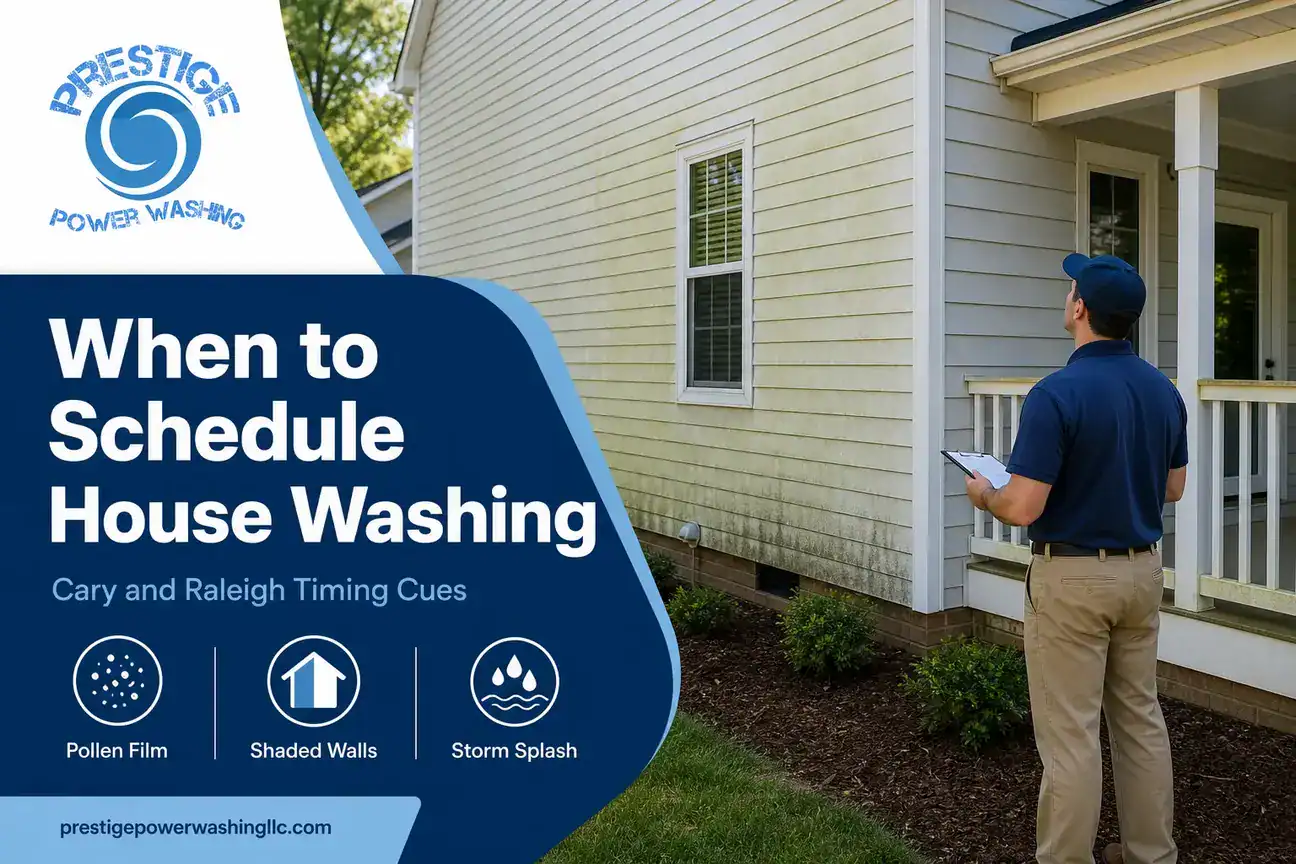
When to Schedule House Washing in Cary and Raleigh
If you are wondering when to schedule house washing Cary NC homeowners can start with one simple question: what does the siding look like today? A calendar can help you plan, but visible conditions usually tell the clearer story. In Cary, Raleigh, and the Triangle, pollen, shade, summer humidity, tree cover, storm splash, and irrigation overspray can all make siding look dull or streaked sooner than expected.
Homeowners often search for house washing Cary NC timing because there is no single calendar rule that fits every property. A sunny home with good airflow may look fine for longer, while a shaded home near trees may show green or dark discoloration sooner. The right timing depends on the surface, the amount of buildup, and whether the exterior is staying damp in certain areas.
This guide is for homeowners deciding whether their siding needs attention now or can wait. It covers the main timing cues, how to inspect north-facing walls, what seasonal triggers matter in the Cary and Raleigh area, and how to prepare for a house washing visit without overcomplicating the process.
Prestige Power Washing LLC provides house washing and other exterior cleaning services for residential and commercial properties in Cary, Raleigh, and the Triangle region. Cary is the company’s published address of record; Raleigh and other Triangle communities should be understood as service areas rather than branch locations.
The simplest sign your siding needs service
The clearest sign that it may be time to schedule a wash is visible buildup. Look for pollen film, dirt streaks, green or dark organic growth, staining under trim, and splash marks near the bottom of the siding. If those areas are visible from the driveway, walkway, porch, or patio, waiting may only make the home feel less cared for.
For many homeowners, the decision is not about severe staining. It is about the point when the siding no longer looks clean after normal rain, dry weather, or a quick rinse around the porch. If the same film or streaking keeps returning, a surface-specific cleaning approach may help remove visible buildup and improve the appearance of the exterior.
It is also worth checking whether the buildup is concentrated in one or two areas. A home may have clean-looking siding on the sunny front elevation while the shaded rear wall, side yard, or area near landscaping looks noticeably darker. That uneven appearance is common because different walls dry at different speeds.
A practical approach is to walk around the home slowly and take note of problem areas. Check the siding from multiple angles. Morning and late-afternoon light can reveal streaking that is harder to see at midday. If you can see a film on siding, trim, porch posts, or soffit areas, that is a reasonable cue to start planning service.
When to schedule house washing Cary NC: timing cues that matter
The practical answer is usually condition-based, not rule-based. Instead of following a strict “every X months” mandate, look at the surfaces and the local conditions around your home. Cary and Raleigh properties can experience heavy pollen, humid stretches, shaded yards, and storms that push dirt onto lower siding.
A general pattern many homeowners notice is that exterior surfaces look worse after pollen season, after long humid periods, or after a series of storms. These are not fixed requirements, and they do not affect every house equally. They are simply useful triggers for taking a closer look.
For example, a home with mature trees, shaded side yards, and sprinklers hitting the siding may show buildup sooner than a home with open sun and strong airflow. A house near a busy road or active construction may collect dust differently than a home tucked into a quieter street. The siding material, paint condition, surrounding landscaping, and drainage patterns also matter.
If you are trying to decide whether service can wait, focus on the areas where moisture and debris collect. The more often a wall gets wet and stays shaded, the more likely it is to keep visible discoloration. EPA mold guidance emphasizes moisture control when managing mold concerns in buildings, which is why slow-drying exterior areas are worth watching without assuming every mark has the same cause.
Seasonal house washing after spring pollen
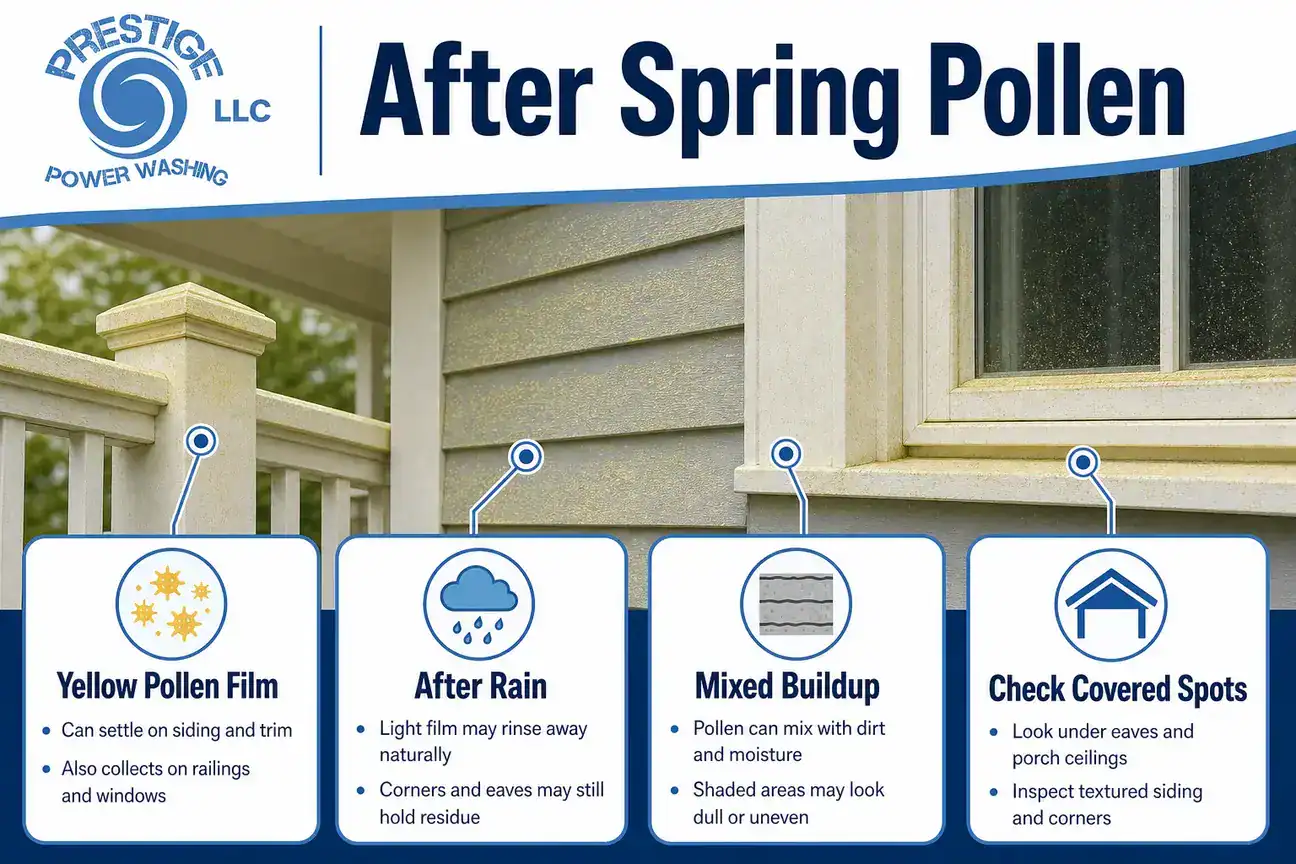
Spring pollen is one of the most familiar reasons homeowners start thinking about seasonal house washing. In the Cary and Raleigh area, yellow pollen can settle on siding, trim, porch ceilings, railings, outdoor furniture, and windows. Even after rain, a film can remain in corners, under eaves, or on textured surfaces.
Pollen alone does not automatically mean your home needs a professional wash. If the siding looks clean after a few rains and the film is light, waiting may be reasonable. But if the pollen mixes with dirt, moisture, or shaded areas, the exterior can look dull and uneven. That is when a house wash may be worth considering.
After spring pollen, pay close attention to covered porches, screened areas, trim lines, and siding seams. Pollen can sit in those spaces longer than it does on open, sunlit walls. If you are preparing for guests, photos, listing a home, or simply want the exterior to look fresher for warmer months, spring or early summer may be a practical time to request an estimate.
The key is not to schedule because pollen exists. Schedule because the pollen film is still visible, is clinging to the siding, or is combining with other buildup. A full detail house wash is meant to match the cleaning method to the surface rather than treating every area as if it needs the same pressure.
Siding cleaning Raleigh NC and Cary homes in humid weather
Humidity can make timing harder because a wall may look dry from a distance while shaded sections stay damp longer. For homeowners comparing siding cleaning Raleigh NC options with house washing in Cary, the same principle applies: inspect the surface first and look for slow-drying areas.
Summer humidity does not mean every home needs immediate cleaning. However, warm and humid conditions can make existing film, organic growth, and streaking more noticeable. Areas behind shrubs, near wooded property lines, and below roof edges may hold moisture longer. If those areas stay damp after rain or irrigation, they may show buildup sooner than open walls.
CDC’s general mold information explains that mold is associated with moisture, while CDC cleanup guidance focuses on handling mold after water problems. For this exterior maintenance topic, those sources support a cautious moisture-control principle only: slow-drying areas deserve attention, but homeowners should not treat every exterior stain as a mold diagnosis.
North-facing and shaded walls are especially worth checking during humid stretches. They often receive less direct sunlight, which can slow drying. A wall that dries slowly after storms may keep dirt, pollen, or organic discoloration visible for longer.
Homeowners should avoid treating all discoloration as the same problem. Some stains respond differently depending on age, surface condition, and what caused them. A careful exterior cleaning company should set expectations clearly and choose an appropriate method for the surface rather than promising complete removal of every mark.
Soft washing siding versus pressure washing
Many homeowners ask whether soft washing siding is different from pressure washing. In simple terms, pressure washing relies more heavily on water pressure, while soft washing uses a lower-pressure application method with cleaning solutions selected for the surface. The appropriate method depends on the siding, the level of buildup, and the condition of the exterior.
Siding, trim, soffits, painted surfaces, and delicate areas often call for a gentler approach than hard concrete. That is why house washing should be surface-specific. The goal is to help remove visible buildup without treating siding like a driveway. The exact approach should be determined by the professional evaluating the home.
If method choice is part of your timing question, remember that timing and technique work together. Pressure can be useful for durable surfaces when applied appropriately, but too much force in the wrong place can be a concern for exterior materials, seams, and fixtures. Homeowners do not need to know technical pressure settings before requesting service.
Prestige Power Washing LLC describes its service approach around pressure washing, power washing, and soft washing, with method selection based on the surface. If your siding needs attention and your roof or gutters are also showing visible buildup, it may be useful to review related services such as roof cleaning and exterior gutter cleaning while you are planning exterior maintenance.
Exterior house cleaning signs around the whole property
Good timing is not only about siding. Exterior house cleaning decisions often become clearer when you look at the whole property. A clean front wall with stained lower siding near mulch beds may point to storm splash. Clean upper siding with dark trim under gutters may point to drainage or overflow patterns. A green film behind shrubs may point to shade and airflow.
Start at the street, then move closer. From the curb, ask whether the home still looks evenly clean. From the walkway, look for streaks under windows, dirt along trim, and discoloration near porch columns. From the side yard, inspect areas that rarely get full sun. The goal is to understand where the buildup is happening, not to diagnose every mark.
This whole-property view helps with timing because siding rarely changes in isolation. Some exterior areas may need a different service than siding cleaning. For example, roof streaking should not be treated the same way as siding. Gutter exteriors and downspouts may show their own streaks. Driveways, patios, and walkways are different surfaces again.
If you are unsure where house washing stops and another service begins, review the company’s exterior cleaning services or ask when requesting an estimate. Clear communication before a visit helps set expectations about which surfaces are included and which may require a separate recommendation.
What to check on north-facing walls
North-facing walls are one of the most useful inspection points because they often dry more slowly. In Cary and Raleigh neighborhoods with mature tree cover, a north-facing wall may spend much of the day in shade. That can make pollen film, organic discoloration, and dirt streaking more noticeable than on sunnier walls.
Walk along the north side of the home and look from several distances. Close up, check the texture of the siding, seams, and lower panels. From farther away, look for broad patches of discoloration. If the wall looks darker than the rest of the home or has recurring green areas, that is a practical sign that house washing may be worth planning.
Do not forget small spaces. Look behind bushes, under window ledges, around vents, and near downspouts. These areas can trap shade, debris, and moisture. If landscaping touches or nearly touches the siding, the wall may not get much airflow. Trimming plants is not part of house washing, but clearing access before service can help the crew reach the siding more easily.
North-facing walls often show early warning signs that sunnier walls may hide. If the north side is visibly stained while the front still looks acceptable, you may choose to schedule before the whole exterior appears dirty.
Why shade and tree cover matter
Trees add comfort and curb appeal, but they also affect how siding ages between cleanings. Shade can slow drying after rain. Leaves, pollen, sap, and other debris can settle on surfaces and collect in corners. Branches close to the home can also limit sunlight and airflow around siding.
Tree cover does not automatically create a problem, and shaded homes can still look well maintained. The issue is repeated dampness and debris accumulation. If the same shaded section looks green or streaked after every wet period, that wall is giving you a timing cue. It is not about panic; it is about noticing what the surface is telling you.
Shade patterns are a practical part of a Cary or Raleigh house-washing decision. Look for buildup below overhanging limbs, behind foundation plantings, and around screened porches. Also check where leaves collect near rooflines and gutters. If gutters or downspouts are leaving streaks on siding, exterior gutter cleaning may be worth discussing along with a house wash.
For homeowners who want a “Prestige Clean” appearance without overdoing maintenance, shade mapping can be helpful. Notice which walls stay damp longest after rain. Those walls are usually the ones to inspect first during seasonal cleaning decisions.
Storm splash, irrigation overspray, and runoff context
Lower siding often tells the story after storms. Heavy rain can splash soil, mulch, and debris onto the bottom panels of siding, porch skirts, foundation areas, and steps. If your home has mulch beds close to the exterior, the splash line may be easy to spot.
Storm splash is usually most visible on light-colored siding. You may see a brownish line near the bottom of the wall, speckling around porch areas, or dirt collecting where the siding meets trim. If this buildup keeps returning after storms, it can be a practical reason to schedule a wash rather than waiting until the entire wall looks dull.
Irrigation overspray is another timing cue. Sprinklers that repeatedly hit siding, fences, or porch columns can keep surfaces damp. They may also leave mineral spotting or dirt patterns depending on the water and surrounding landscaping. Adjusting sprinklers may help reduce repeated wetting, but visible buildup may still need cleaning.
Look at areas near flower beds, side yards, and sprinkler heads. If siding near irrigation stays wet or looks darker than nearby areas, the timing may be less about the season and more about repeated moisture exposure.
Runoff is also a reasonable homeowner question whenever exterior cleaning happens outdoors. EPA’s NPDES stormwater program and North Carolina DEQ’s industrial stormwater guidance are listed in the sources as general background on why stormwater and runoff conversations matter. They should not be read as a claim that any specific contractor has a documented compliance program unless that proof is separately provided.
A practical homeowner checklist before requesting a visit
A short checklist can make the decision easier. You do not need special tools. A slow walk around the home, a few notes, and clear photos can help you decide whether to request an estimate and help the service provider understand the areas that matter most to you.
| Area to inspect | What to look for | Why it matters |
|---|---|---|
| North-facing walls | Green or dark discoloration, slow-drying spots, shaded siding | These walls often show buildup earlier and keep it longer |
| Tree-covered areas | Pollen film, leaf debris, streaking under branches | Shade and debris can make surfaces look dull sooner |
| Lower siding | Storm splash, mulch marks, dirt near foundation areas | Rain can push soil and debris onto the siding |
| Irrigation zones | Overspray marks, recurring dampness, spotting near sprinklers | Repeated wetting can keep buildup visible |
| Downspouts and gutters | Streaking, overflow marks, damp areas beside downspouts | Drainage patterns may affect siding appearance |
| Porches and entries | Pollen film, dirty trim, dull columns or railings | These areas shape first impressions and collect film |
If several areas show visible buildup, it may be a good time to request a free estimate. If only one small section looks questionable and the rest of the home is still clean, you may decide to monitor it after the next rain or pollen event.
This checklist also helps prevent confusion when you are deciding on house-washing timing. Instead of saying “the house looks dirty,” you can identify specific areas: the north wall behind the shrubs, the lower siding near the mulch bed, the porch trim, or the siding hit by sprinklers. That kind of detail supports clear communication and a more pain-free service experience.
Pre-service preparation for a full detail house wash
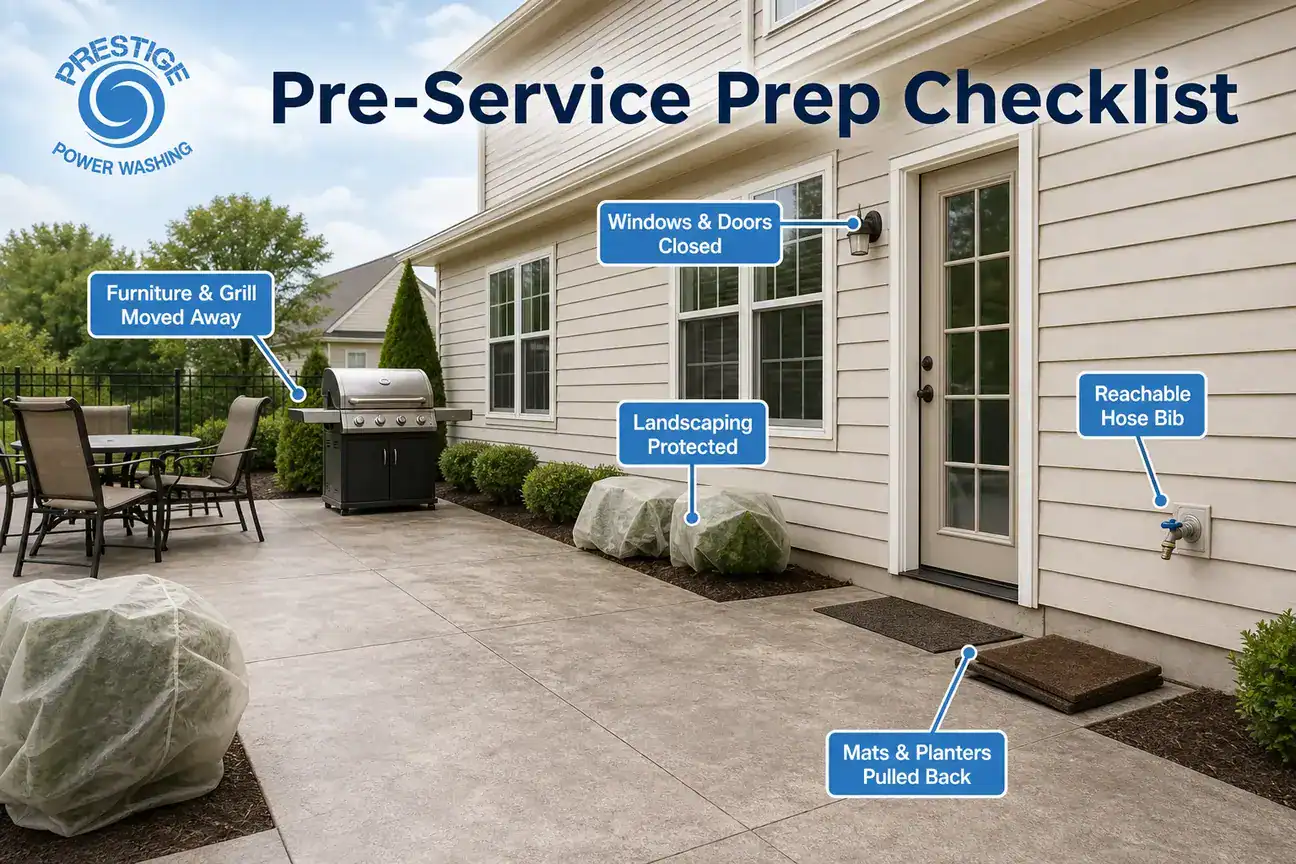
Once you decide to schedule, simple preparation can make the visit smoother. Before a full detail house wash, close windows and doors, check that storm windows are secure, and move outdoor items away from the work area. This includes patio furniture, grills, planters, doormats, seasonal décor, and small items near walls.
Keep pets and people away from the cleaning zone during service. If there are gates, access points, or areas that are easy to miss, mention them ahead of time. If the crew needs exterior water access, make sure hose bibs or spigots are reachable. Do not assume every home is set up the same way.
Point out delicate items, loose fixtures, older screens, doorbell cameras, exterior outlets, or areas that already have damage or gaps. House washing is exterior cleaning, not repair work, so existing issues should be noted before service begins. If something seems fragile, it is better to mention it than hope the crew notices.
Move vehicles if they block access to siding, garage trim, or walkways. If you have porch cushions, flags, wreaths, or hanging baskets, relocate them temporarily. If you recently painted, repaired, or sealed a surface, tell the company before work is scheduled so the appropriate guidance can be discussed.
Preparation is the next step after choosing the right time for service. A little exterior prep supports a clearer appointment and helps the crew focus on surface-specific cleaning. If you are ready to talk through the condition of your siding, you can request a free estimate from Prestige Power Washing LLC without needing to diagnose every mark yourself.
When waiting is reasonable
Sometimes waiting is the right call. If the siding is still mostly clean, there is no heavy pollen film, no recurring green or dark buildup, and no obvious splash marks, you may not need service right away. A few dusty areas after a dry week may improve after normal weather. A light film on outdoor furniture does not always mean the siding needs professional cleaning.
Waiting can also be reasonable if you are in the middle of landscaping, exterior repairs, or painting preparation. However, if you are preparing for paint, ask the painter or contractor what surface preparation they expect. Pressure washing before painting is preparation only; it is not the paint job itself, and requirements may vary by coating and surface condition.
Another reason to wait is uncertainty about the surface. If siding appears loose, damaged, rotted, or improperly sealed, exterior repairs may need attention before washing. Cleaning should not be used as a substitute for maintenance or repair. A reputable provider can look at visible conditions, but homeowners should involve qualified repair professionals when structural or material concerns are present.
If only one small area is showing buildup, take a photo and check it again after the next rain or during a drier stretch. If the discoloration remains or spreads, that gives you more information. This is a balanced way to make a timing decision without rushing into service before the home needs it.
When not to wait too long
Waiting becomes less appealing when buildup is clearly visible across multiple surfaces. If the siding looks streaked from the street, if the porch area feels coated with pollen, or if shaded walls show recurring organic discoloration, scheduling may be sensible. It is often easier to plan service when the first strong cues appear rather than waiting until every elevation looks neglected.
You may also want to schedule before a major event, before listing a home, after pollen has settled, or after a stretch of storms has left splash marks around the lower siding. These are personal timing choices, not mandated cleaning intervals. Useful timing is the point when cleaning would improve how you use and feel about the property.
For homeowners comparing options, remember that house washing is not only a seasonal question. It is a property-specific question. A shaded, tree-covered home may need attention sooner than an open, sunny home. A home with sprinklers hitting siding may show recurring marks even if the rest of the exterior looks fine.
If you are unsure, an estimate request can help you get a clearer view of the scope. Avoid any contractor who promises absolute results for every stain or treats every surface the same. Exterior cleaning outcomes depend on the surface, the cause of the buildup, and the condition of the material.
Related services to consider while planning
House washing often brings other exterior areas into focus. If siding is stained below gutters, the gutters and downspouts may be worth checking. If roof streaks are visible, they should be evaluated as a separate surface with a separate cleaning method. If patios, walkways, or driveways look dull, those hard surfaces may need a different approach than siding.
Prestige Power Washing LLC offers a range of exterior cleaning services, including house washing, roof soft washing, exterior gutter and downspout cleaning, driveway pressure washing, patio cleaning, and commercial exterior cleaning. The right combination depends on your property and should be confirmed for the specific surfaces you want addressed.
Planning related surfaces can also clarify the timing. For homeowners in Cary and Raleigh, combining discussions can be practical. You might ask about siding, gutters, and roof appearance during the same estimate conversation. That does not mean every service is needed. It simply helps you understand which surfaces are contributing to the overall look of the home.
If you manage a small commercial property, HOA building, or multi-unit exterior, the same condition-based thinking applies. Look for visible buildup, shaded breezeways, splash zones, and drainage patterns. Commercial cleaning should not be framed as a promise of code, health, or safety outcomes, but visible exterior maintenance can still be part of practical property care.
How Cary and Raleigh homeowners can decide with confidence
Use a simple three-part test. First, look for visible buildup. Second, identify the cause or pattern, such as pollen, shade, tree cover, storm splash, or irrigation overspray. Third, decide whether cleaning now would meaningfully improve the appearance of the property.
If the answer is yes, scheduling is reasonable. If the answer is no, waiting and monitoring may be fine. This balanced approach avoids both extremes: ignoring obvious buildup for too long or scheduling just because a calendar says so.
It also respects the fact that homes in the Triangle vary. A Cary home with dense shade near a creek corridor may show different exterior conditions than a Raleigh home with full sun and open airflow. Even within the same neighborhood, siding exposure, landscaping, and drainage can change the timing.
When in doubt, take photos of the areas that concern you. Capture the north-facing wall, lower siding, areas near sprinklers, and any streaking near gutters or downspouts. Photos can help you explain what you are seeing and can make the estimate conversation more productive.
Prestige Power Washing LLC is family-owned and locally operated, with a website-confirmed founding date of February 2017. The company’s approach centers on matching pressure washing, power washing, or soft washing methods to the surface. For homeowners, that means the conversation can stay focused on the condition of the siding and the appropriate method for the surface.
Quick decision guide: clean now or wait?
If you want a fast answer, use the guide below. It is not a substitute for an estimate, and it is not a required schedule. It is a plainspoken way to think through common conditions.
- Schedule soon: siding has visible pollen film, green or dark discoloration, streaks, or splash marks that remain after normal weather.
- Schedule soon: north-facing walls or shaded areas look noticeably darker than the rest of the home.
- Schedule soon: irrigation overspray keeps hitting siding and the area stays visibly marked or damp-looking.
- Consider waiting: siding still looks even and clean, with no recurring buildup or staining.
- Consider waiting: only light dust is present and recent weather may naturally rinse the surface.
- Ask first: siding appears loose, damaged, newly painted, or in need of repair before cleaning.
The decision does not need to be complicated. If visible conditions suggest service, ask for guidance. If the home still looks clean, monitor the areas most likely to change: north-facing walls, shaded corners, lower siding, and spots near sprinklers.
A low-pressure way to plan your next house wash
If you are still deciding on the right time for a house wash, start with a walkaround and a few photos. Look closely at pollen film, shaded walls, tree-covered areas, storm splash, and irrigation overspray. Those cues will tell you more than a fixed calendar ever could.
When the siding is visibly dull, streaked, or showing recurring buildup, Prestige Power Washing LLC can discuss a full detail house wash and related exterior cleaning needs for properties in Cary, Raleigh, and the Triangle region. You can request a free estimate online or call 919-520-4521 during published business hours. There is no need to guess the method yourself; the important step is sharing what you see and asking what approach fits the surface.
Frequently Asked Questions
How do I know if my siding can wait?
If the siding still looks mostly clean, has no heavy pollen film, and does not show recurring green, dark, or splash-related staining, waiting can be reasonable. Keep an eye on north-facing walls, shaded areas, and lower siding after storms.
Is spring always the right time for house washing in Cary and Raleigh?
Spring is common because pollen can leave a visible film, but it is not the only right time. The better cue is visible buildup. If the siding looks clean after pollen season, you may be able to wait.
Why do north-facing walls often look dirty first?
North-facing walls often receive less direct sunlight, so they may dry more slowly after rain or irrigation. Slower drying can make pollen, dirt, and organic discoloration stay visible longer than on sunnier walls.
Does irrigation overspray affect when to schedule house washing?
Yes, it can. Sprinklers that repeatedly hit siding may keep that area damp and leave visible marks or buildup. Adjusting the spray pattern may help reduce repeat wetting, but existing buildup may still need cleaning.
What should I do before a house washing visit?
Close windows and doors, move furniture and décor away from exterior walls, keep pets and people clear of the work area, point out fragile or loose items, and make sure exterior water access points are reachable.
Should I wait until siding stains get worse?
Not necessarily. If buildup is already visible from common viewing areas, scheduling sooner may be practical. Waiting is usually more reasonable when the siding still looks even and clean.
Is house washing the same as roof cleaning or gutter cleaning?
No. Siding, roofs, gutters, concrete, and patios are different surfaces and may need different methods. If roof streaks or gutter stains are also visible, ask whether those should be evaluated separately.